
Dengue Fever in Bali: My Recovery Story After the Illness

Hi everyone,,
My last post was about dengue (link to the post): my experience with the illness, and at the end, I wrote that I was gradually recovering and that the process takes about 3–5 weeks. How naïve I was 🙂 I had no idea what was waiting for me in the following months. So today, I want to share what was happening with my body for almost three months after the illness, and how I managed to recover from it all.
I can roughly divide my post-dengue consequences into three groups:
Now let’s go through each of these points one by one.
General weakness
My normal blood pressure is already low (100–90/70–60), but after dengue it dropped even further, down to 70–50. When I woke up and got out of bed, I felt dizzy; I couldn’t exercise in the gym. Whenever I bent over or stood up too quickly, my head spun. I even bought a blood pressure monitor to measure it myself. In the first dengue post, I mentioned starting a diet and adding iron-rich foods, but obviously, that wasn’t enough.
If you look at standard medical recommendations in such cases, they include: staying hydrated, drinking electrolyte-rich fluids (which I was already doing before dengue), eating a nutritious diet with iron-rich foods, and taking iron supplements (but only after consulting a doctor).
I’ll be honest—I didn’t consult a doctor (not saying that’s the right thing to do, but I guess I’ll be the first to admit I was picking supplements together with ChatGPT, so don’t judge too harshly 🙂). I just chose an option available on the Bali market: HEMA PLEX by Nature’s Plus. It’s a complex supplement with highly absorbable iron, B vitamins, vitamin C, and trace minerals, designed to support blood formation and restore energy. Within a week, I felt better. After a month, my blood pressure normalized, the dizziness disappeared, and the dark flashes in my eyes after sudden movements were gone.
It took me about a month to solve the issues of weakness, low blood pressure, and dizziness. But I continued HEMA PLEX for another month to consolidate the results.
Skin problems (body & face) after dengue fever in Bali
I already mentioned in the first post that after the rash, my legs turned purple. This happened because of capillary damage caused by high fever and low platelets. It took about 3–4 weeks for them to return to normal color. On top of that, my skin was severely dehydrated; the skin on my palms, feet, and elbows was peeling off in chunks. This recovery process lasted about a month and a half.

What did I do?
I moisturized daily, used a cleanser with AHA acids in the evening to gently exfoliate dead skin cells, and once a week applied a gel-like toner with acids and enzymes all over my body (though it’s meant for the face, I often use face products on my body as well).

I mostly use Indonesian skincare, which definitely deserves a separate post that I promise to write.
While I was in the hospital with dengue, of course, I had no energy for skincare—washing my face and maybe some moisturizer was all I could manage. After returning home, I gradually got back into my routine. My skin was pale, dehydrated, but started becoming oily, with clogged pores and occasional breakouts. To regulate sebum, I added an 8% glycolic acid toner (previously I used it 1–2 times a week, now I increased it to 3–4 times). I also swapped my neutral cleanser for one with alpha-lipoic and glycolic acids. Then I went back to my usual skincare: serums (vitamin C, peptides, retinol) and a ceramide moisturizer, plus different hydrating masks, which I love here. I also added a clay mask for pore cleansing.
My facial skin recovered fairly quickly.

Hair loss
But what worried me most was hair loss. With skin, I knew I wouldn’t lose it forever. With hair—it felt like I might actually go bald.
In the first 3–4 weeks after dengue fever in Bali, my hair became extremely oily—just like my face. It seemed like the shampoo I had been using for years suddenly stopped working. I thought the problem was the water, so I switched to filtered water. Didn’t help. I started trying different shampoos. I believe a shampoo’s job is to clean hair well—when brands add lots of “extras” (nourishing, moisturizing, repairing), they often fail at their main function, and the product just goes down the drain. That’s why I stopped buying expensive salon brands long ago. For me, mass-market shampoos work best. After trying L’Oréal with salicylic acid and some local brands, the best at that moment was Head & Shoulders for oily hair.
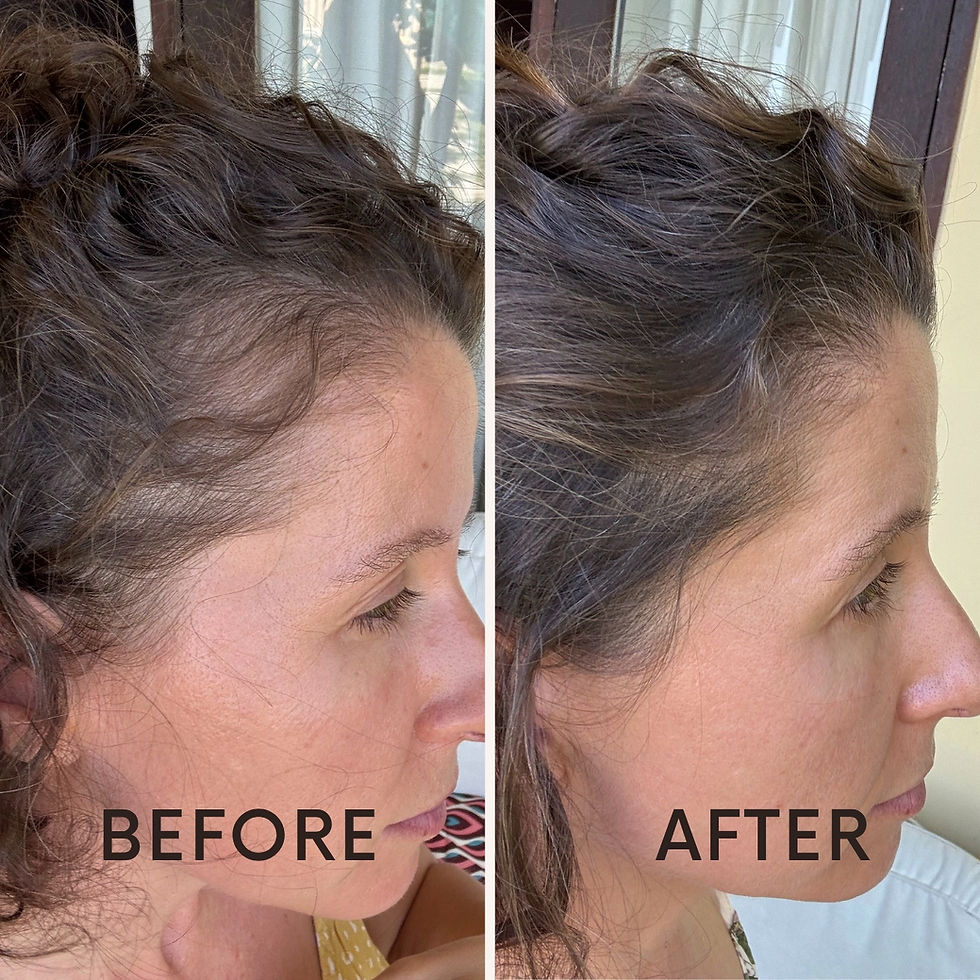
But after another 2–3 weeks, I began to feel actual pain at my hair roots—as if all the follicles were sore—and then the hair started falling out. It was so intense I became afraid to wash or brush it, thinking I’d end up bald. Bald spots appeared on my temples, and my hair lost its density.
Another thing—I noticed changes in my nails: old nail was white, then there was a bright white band, and then the new nail was pink.
And of course, I turned to my ChatGPT: “What the heck is happening, and what do I do about it?”
He explained that everything was absolutely normal after dengue. During the illness, platelets drop drastically, there’s high fever and exhaustion. Nails, skin, and hair essentially “freeze” their growth. When recovery begins, growth restarts, and you see a visible line or color change on nails. The same applies to skin and hair. So everything started peeling off, shedding, and I wasn’t supposed to worry. He said hair shedding usually lasts 2–4 months after dengue, and then it fully recovers within 6–12 months 🙂
That was reassuring, but I was still losing hair like crazy—and it was only month two post-dengue. If this continued for four months, I’d be bald. I had to act quickly.
Technically, I should have gone to a trichologist. But I didn’t feel like searching for one in Bali. I knew the cause—it was inevitable in my case; the dead hair had to fall out. My goal was to speed up recovery and stimulate new growth. Like most people, I turned to the internet: I watched doctors’ videos on YouTube, read articles, and discussed everything with ChatGPT.
Here’s the plan I followed:
Head & Shoulders worked for cleaning, but dried my curly ends too much. I found a new Dove shampoo in the pharmacy that promised to solve both my problems—oily roots and hair loss—without drying. It worked great.
Added a moisturizing conditioner for curly hair from Italian brand Alfaparf (before, I only used a leave-in from the same brand). Also added their anti-hair loss spray, which I use after every wash.
Once a week, before sauna, I massaged rosemary oil mixed with argan oil into my scalp (a folk method 🙂 I was combining everything possible to make sure something worked).
Many doctors/bloggers recommend Nizoral Anti-Dandruff Shampoo 1% Ketoconazole (200 ml). Its primary purpose is dandruff treatment, but as a “side effect,” it also promotes hair regrowth and reduces oiliness. I use it twice a week.
Supplements: biotin, collagen, omega-3. By the way, I plan to continue collagen. Opinions on its effectiveness vary, but the placebo effect hasn’t been canceled—and I feel it helps 🙂
I also added Minoxidil Kirkland 5%—a popular anti-hair loss treatment available in liquid or foam. It boosts blood circulation and stimulates new hair growth. Even before dengue, I noticed thinning around my temples (a normal issue for women with age), but after dengue, I developed bald patches there. I applied the foam specifically to these areas every night before bed.
Dove, Alfaparf Semi di Lino, Nizoral, and natural oils. Vital Proteins Collagen Peptides, NOW Ultra Omega-3, and Biotin 5000 mcg Minoxidil Kirkland 5%
Supplements and hair care that supported my recovery
I started all this in late June. By August, I noticed lots of baby hairs on my temples and all over my head. By mid-September, after washing my hair, I realized the shedding had stopped. I’m still taking all the supplements and sticking to the routine. My hair no longer falls out, the bald spots on my temples are covered with new growth, and now I’m waiting for my hair to regain its full thickness. This whole strategy worked for me.
This is my story of recovery after dengue.
I hope it was interesting and helpful. If you’re planning a trip to Bali and worry about catching dengue: First, follow simple safety rules to avoid mosquito bites (see my first dengue post for tips). Second, remember that everyone’s experience is different. My case was complicated, so recovery took longer. Two of our close friends got dengue around the same time I did, but their experience was much lighter—both during the illness and recovery. And we also know many people who’ve lived in Bali for years and never caught dengue at all. So don’t panic ahead of time—everyone has their own story 🙂
Thank you for reading! 💛
Olya
P.S. I want to remind you kindly: my story and tips are for educational purposes only. Always consult your doctor before starting any treatment.

Comments